Oxidised Jewellery: What It Means and Why It Looks Dark
In this guide
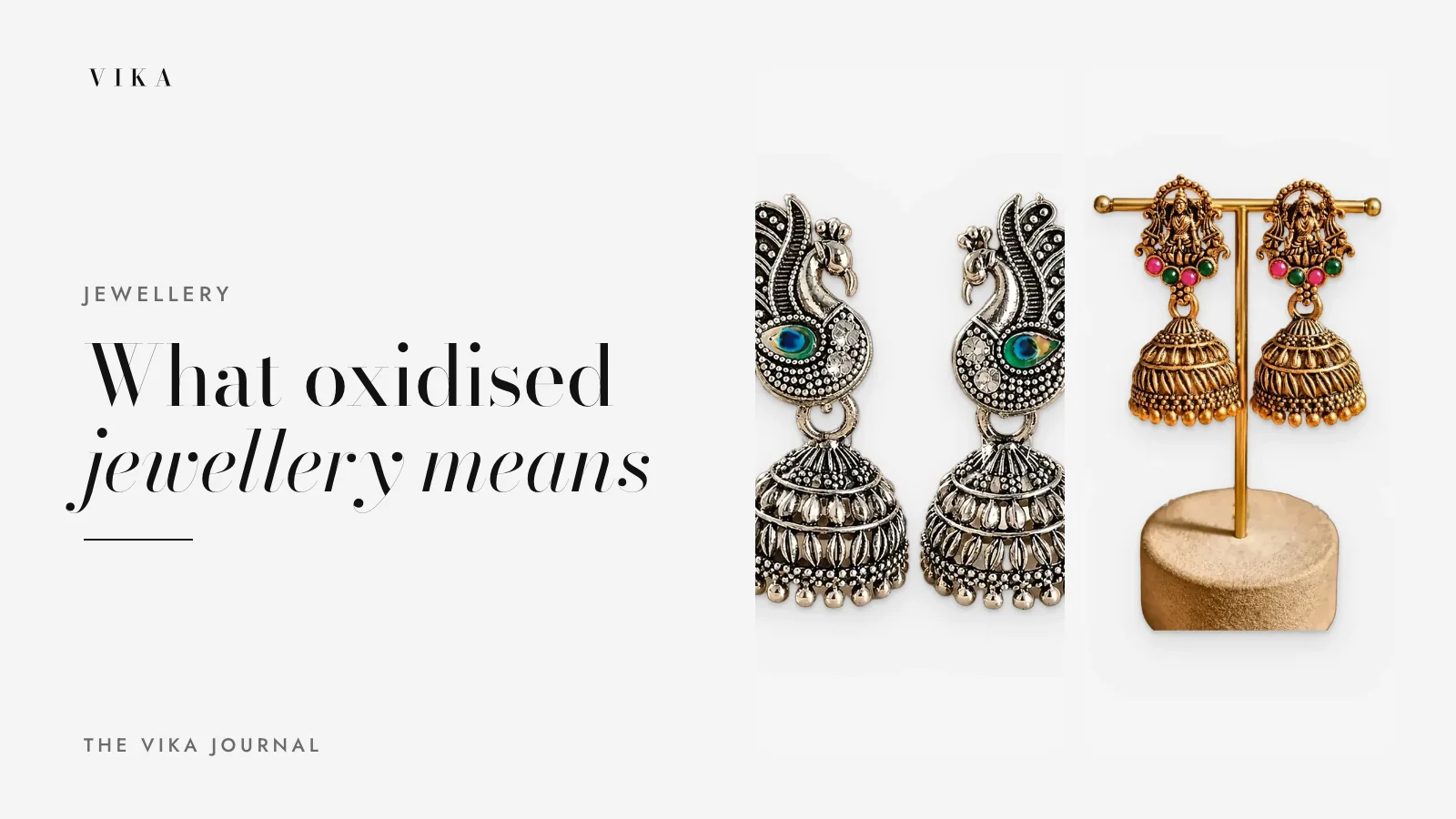
Oxidised jewellery is jewellery with a deliberately darkened finish. The metal is treated so its surface turns grey or black, and the raised parts are then polished back to bright, so the pattern stands out in light and shadow. The dark look is the design, not a sign of age or poor quality.
Here is how the finish is made, how it differs from tarnish, whether oxidised means real silver, and how to keep it looking right.
How the dark finish is made
On silver, the classic method uses a sulfur solution. Jewellers often use one called liver of sulfur, a mixture of potassium compounds which, in the words of its Wikipedia entry, is mainly used in metalworking to form a brown or black patina on copper and silver. The piece is dipped, it darkens, and then the high points are rubbed bright again.
The word "oxidised" is a trade name more than a chemistry term. The dark layer on silver is silver sulfide, formed by sulfur rather than by oxygen. That matters for care, as you will see below.
Oxidised finish or tarnish: what is the difference?
They are close chemical cousins. The Canadian Conservation Institute explains that tarnish on silver is silver sulfide, which forms when the silver reacts with sulfur-containing gases in the air. An oxidised finish is the same kind of darkening, made on purpose and placed where the designer wants it.
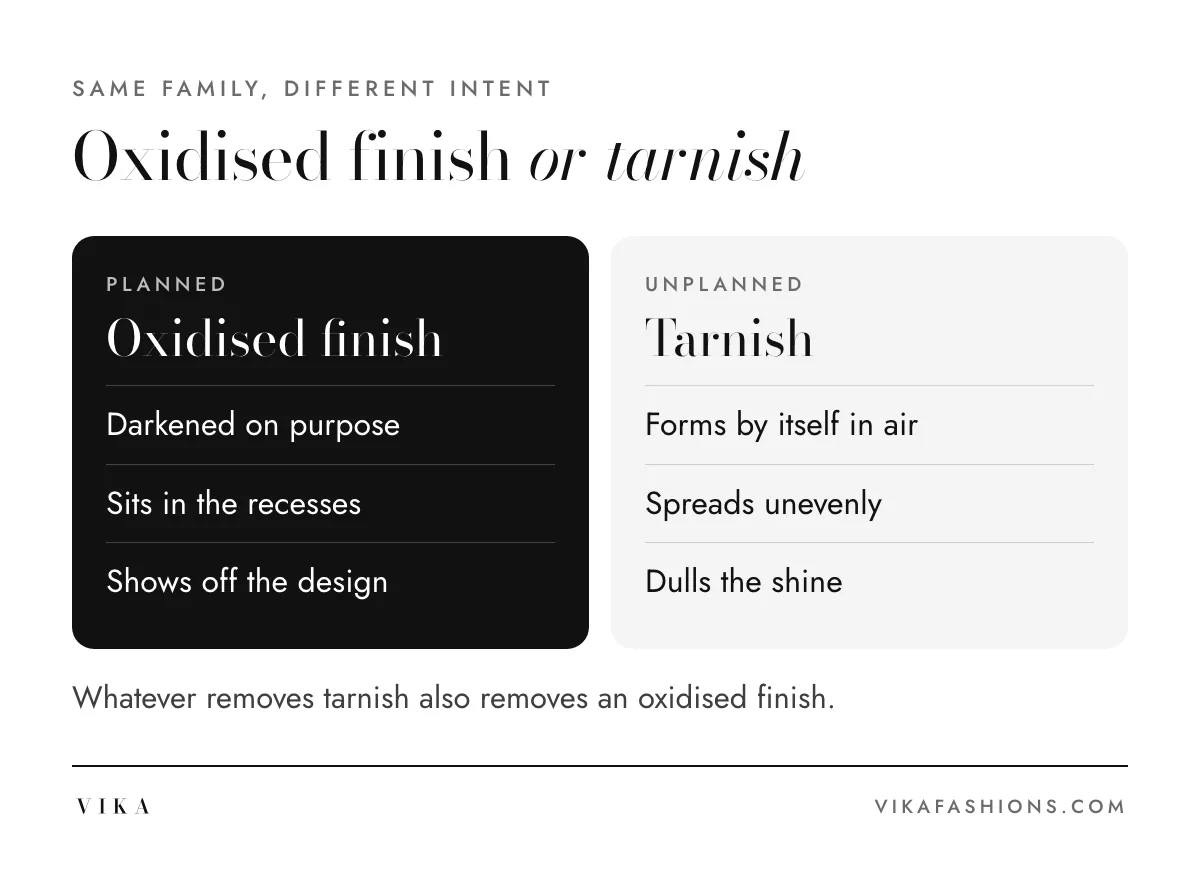
| Oxidised finish | Tarnish | |
|---|---|---|
| How it forms | Applied on purpose by the maker | By itself, from sulfur in the air |
| Where it sits | In the recesses, to show the pattern | Anywhere, often unevenly |
| What it means | The intended look | A change you may want to remove |
| What removes it | Polishes, dips and abrasives | The same |
The last row is the important one. Anything strong enough to remove tarnish will also remove an oxidised finish. That is why oxidised jewellery needs gentle cleaning, which we explain step by step in how to clean oxidised jewellery.
Is oxidised jewellery real silver?
Sometimes. Oxidised sterling silver exists, and is usually stamped 925 to show its silver content. But a great deal of everyday oxidised fashion jewellery is made from other metals and alloys with a silver-tone darkened finish, which is why it is so affordable.
Neither is better or worse to wear. They are different products at different prices. The practical advice: unless a piece is sold to you as sterling silver, treat it as fashion jewellery, and treat its dark finish as delicate.
One more point for sensitive skin. The NHS lists metals such as nickel or cobalt in jewellery among the causes of contact dermatitis. If your earlobes itch or redden after wearing a pair, keep them for short wear.
Why people love oxidised jewellery
- It shows detail. The dark recesses make motifs like peacocks, flowers and deities easy to read from a distance.
- It suits everyday clothes. Grey and black sit well with cotton, handloom, indigo and denim.
- It feels relaxed. It is less formal than gold-tone, so it works for college, office and travel.
The most popular form in India is the oxidised jhumka. See it among the other styles in types of jhumkas, and pairing ideas in how to style jhumkas.
Oxidised jhumka from our shop

Looking after an oxidised finish
- Wipe, do not polish. A dry, soft cotton cloth after wearing is enough.
- Keep it away from moisture and chemicals. Put it on after perfume, lotion and hairspray, and take it off before bathing.
- Store it sealed. The Canadian Conservation Institute notes that tarnishing can be minimized during storage by placing silver inside sealed polyethylene bags. A small zip bag per pair does the same job at home.
- Skip silver dips and polishing cloths. Both are made to remove dark layers.
For your other pieces, see how to clean and store artificial jewellery.
Shop our jhumkas.
Questions people ask
What does oxidised jewellery mean?
It means jewellery with a deliberately darkened finish. The surface is turned grey or black and the raised parts are polished, so the design stands out.
Is it safe to wear oxidised jewellery?
For most people, yes. If you have a known metal allergy, such as to nickel, check what the piece is made of and wear it for short periods, because some fashion jewellery metals can cause skin reactions.
Does oxidised jewellery turn black over time?
It is already dark by design. If it is silver, the bright parts can tarnish too. If it is a plated or alloy piece, the finish can wear with heavy use and moisture.
Can oxidised jewellery be cleaned?
Yes, gently. Wipe it with a soft dry cloth, and avoid dips, polishes, toothpaste and baking soda pastes, which strip the dark finish.
Sources
- Canadian Conservation Institute: Understanding how silver objects tarnish and Silver: care and tarnish removal (CCI Notes 9/7), read 14 November 2026.
- Wikipedia: Liver of sulfur, read 15 November 2026.
- NHS: Contact dermatitis: causes, read 14 November 2026.