Anti-Tarnish Jewellery: What It Means and How Long It Lasts

In this guide
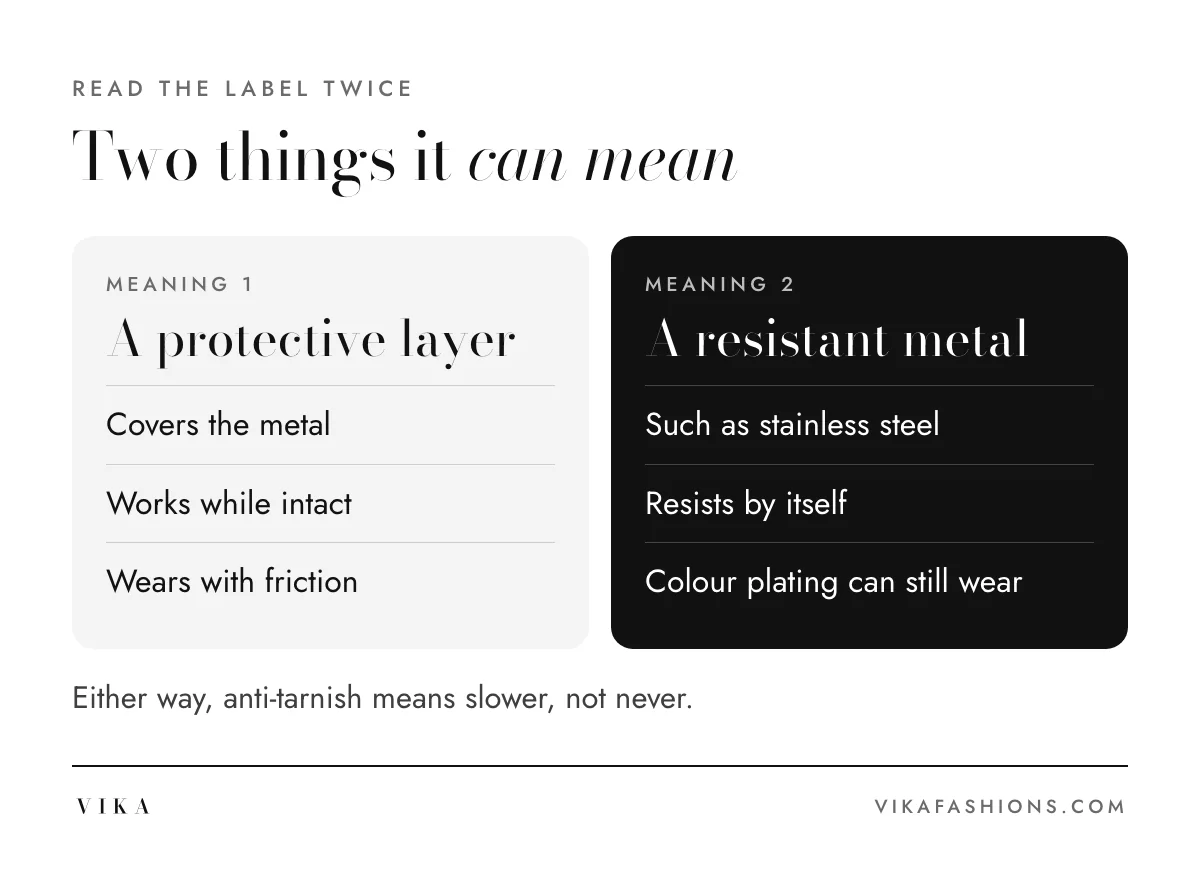
Anti-tarnish jewellery is jewellery made to resist the darkening and dulling that metal shows over time. The label covers two different things: a protective coating over the metal, or a base metal that resists tarnish by itself, such as stainless steel. Either way, anti-tarnish means slower, not never. How long it stays bright depends mostly on how you wear and store it.
This guide explains what tarnish is, what the label can mean, what wears a finish down, and the habits that keep a piece looking new for longer.
What tarnish is
Tarnish is a thin layer that forms when metal reacts with things in the air. On silver, the Canadian Conservation Institute explains, tarnish is silver sulfide, formed when silver reacts with sulfur-containing gases in the air, and humidity affects how fast it happens. Copper-based alloys darken in a similar way. Sweat, perfume and moisture speed it up.
So anything that keeps air, moisture and chemicals away from the metal, or a metal that does not react easily, will tarnish more slowly.
The two things "anti-tarnish" can mean
1. A protective layer over the metal
Many fashion pieces are a base metal with a coloured plating, and a clear or metal protective layer on top. The layer acts as a barrier between the metal and the air. It works well while it is intact. Friction, scratches and harsh chemicals wear it, starting at the edges and on the parts that rub against skin or clothes.
2. A metal that resists tarnish by itself
Some metals hardly tarnish at all. Stainless steel is the common one in fashion jewellery: the Australian Stainless Steel Development Association describes it as steel containing a minimum of 10.5% chromium, which forms a thin, self-repairing protective film on the surface. Gold-coloured stainless pieces often carry a plated colour layer, which can wear even though the steel underneath does not tarnish. More in does stainless steel jewellery tarnish?
How long does anti-tarnish jewellery last?
There is no honest single number. The same piece can look new for years in one drawer and wear in months on another wrist. What decides it:
| Wears it faster | Keeps it longer |
|---|---|
| Wearing it in the shower, pool or sea | Taking it off before water |
| Perfume, lotion and sanitiser on it | Putting it on after those |
| Rubbing against a watch, desk or bag strap | Wearing it on the other wrist from the watch |
| Cleaning with toothpaste or polish | A dry, soft cloth |
| Stored loose with other pieces | Stored alone in a sealed bag |
Be wary of any seller who promises a finish will last a set number of years whatever you do. Wear is about use, not only the product.
Can you wear anti-tarnish jewellery every day?
Yes, that is what it is for, with a little care. Wear it dry, put it on last and take it off first. The Gemological Institute of America's advice applies here too: avoid chlorine and other bleaching agents, which can damage metal alloys, and avoid abrasives like toothpaste.
Daily care in four habits
- Last on, first off. After make-up and perfume, and before bathing, exercise or cooking.
- Wipe after wearing. A soft, dry cloth removes sweat and skin oils, which the Canadian Conservation Institute notes can mark metal.
- Store it sealed. A small zip bag with the air pressed out slows tarnish. The CCI recommends sealed polyethylene bags for silver.
- Never scrub. If it is dirty, see our gentle method in how to clean artificial jewellery.
Our anti-tarnish kada cuffs
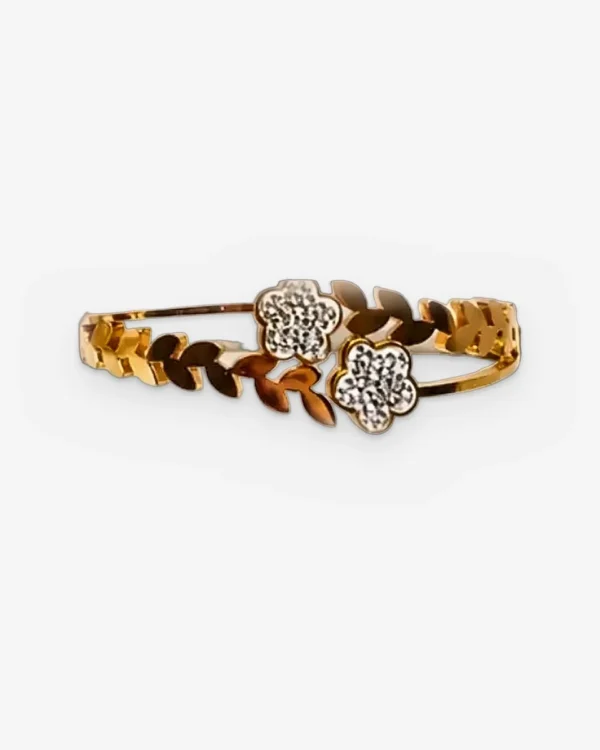
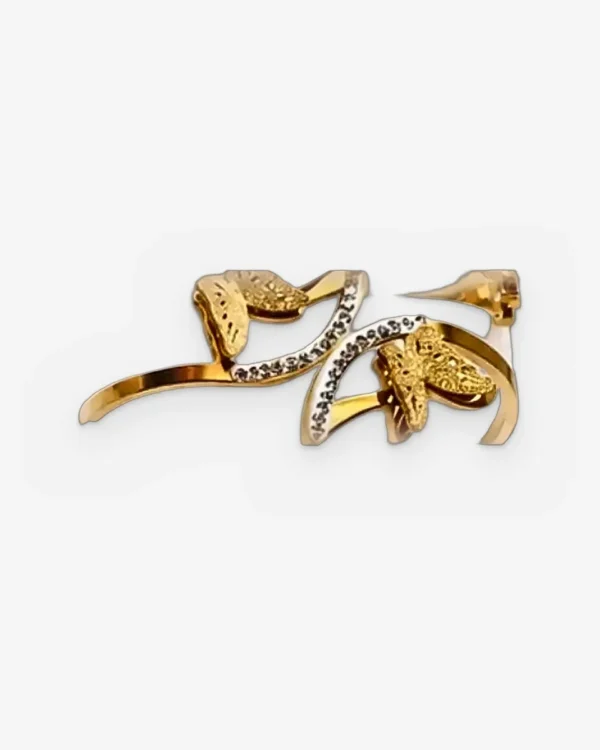
Our kada cuff bracelets are sold as anti-tarnish. Treat them the way this guide describes: dry, last on, first off, and stored on their own. A cuff rubs against desks and sleeves more than earrings do, so wiping it after wearing matters most.
Kada cuff bracelets

See all kada bracelets.
Questions people ask
What does anti-tarnish jewellery mean?
It means jewellery made to resist darkening, either through a protective layer over the metal or by using a metal that resists tarnish, such as stainless steel.
Does anti-tarnish jewellery last forever?
No. It tarnishes more slowly than untreated metal, but coatings wear with friction, water and chemicals. Good habits make a big difference to how long it lasts.
Can I shower with anti-tarnish jewellery?
It is better not to. Water, soap and hot steam all speed up wear on coatings and plating. Take it off first.
Is anti-tarnish the same as waterproof?
No. Anti-tarnish describes resistance to darkening. Waterproof is a stronger claim. Unless a seller clearly says a piece is made for water, keep it dry.
Sources
- Canadian Conservation Institute: Understanding how silver objects tarnish and Silver: care and tarnish removal, read 14 November 2026.
- Australian Stainless Steel Development Association: What is stainless steel?, read 14 November 2026.
- Gemological Institute of America: How to clean jewelry, read 15 November 2026.